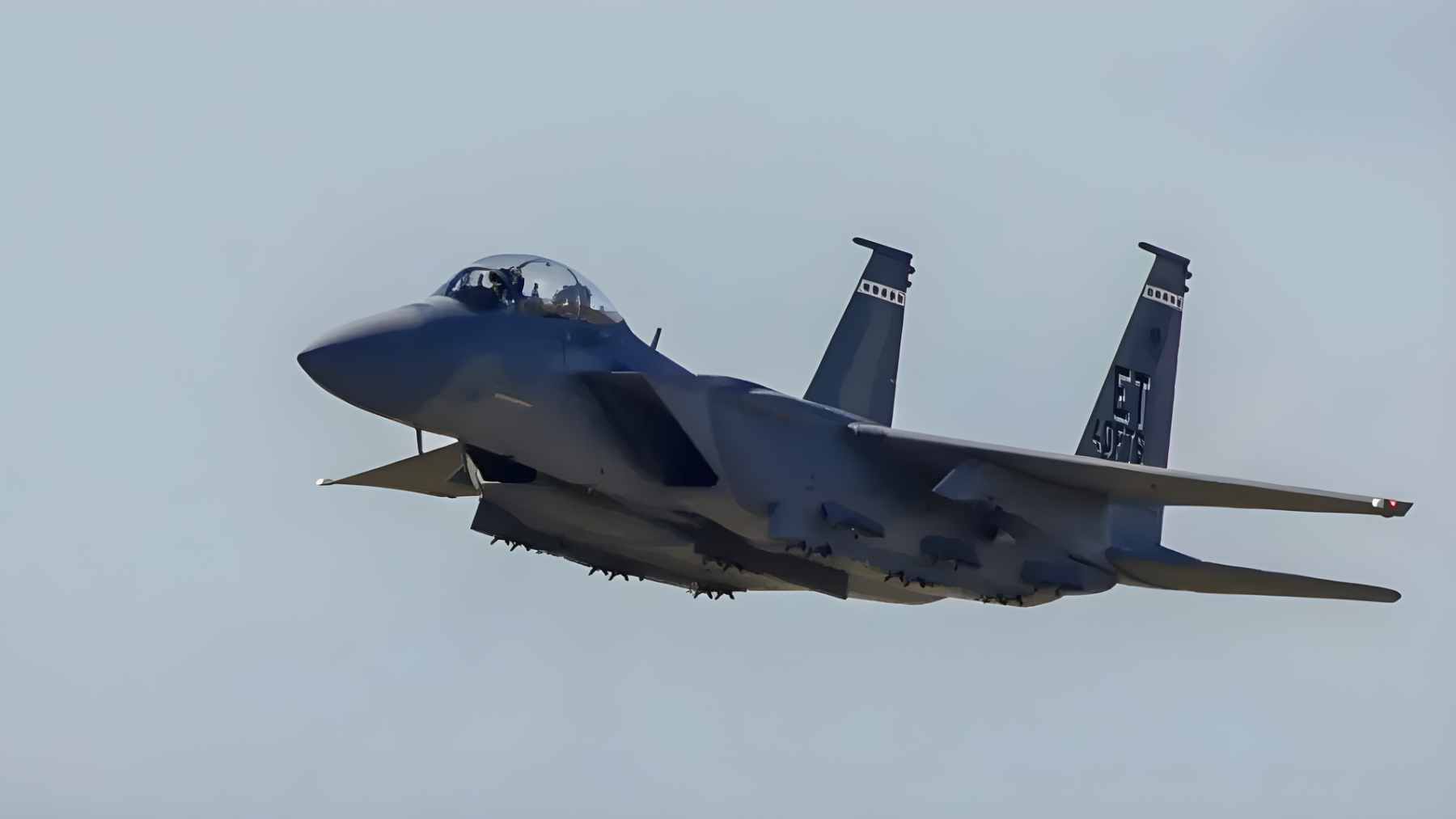
When three U.S. F-15E Strike Eagles went down over Kuwait on March 1 in what CENTCOM called an apparent “friendly fire incident,” the headlines focused on the danger and confusion of a fast-moving conflict.
All six aircrew ejected safely. Just a day earlier, CENTCOM said Operation Epic Fury had begun with strikes on Iranian command and control facilities, air defense capabilities, missile and drone launch sites, and military airfields.
That put the spotlight back on one of the Air Force’s best-known combat jets. What gets less attention? The fuel behind it.
Why the F-15E still matters
The Strike Eagle has been in service since September 1989, and it still looks built for urgency. The Air Force says the F-15E can reach 1,875 miles per hour, or Mach 2.5+, fly about 2,400 miles in ferry configuration, and carry a pilot plus a weapons systems officer.
Its LANTIRN system lets crews fly low, at night, and in bad weather, while a heads-up display keeps flight and tactical data right in front of the pilot. This gives a nearly four-decade-old jet the capability to still move fast, hit hard, and adapt to the kind of mixed air and ground fight now unfolding in the region.
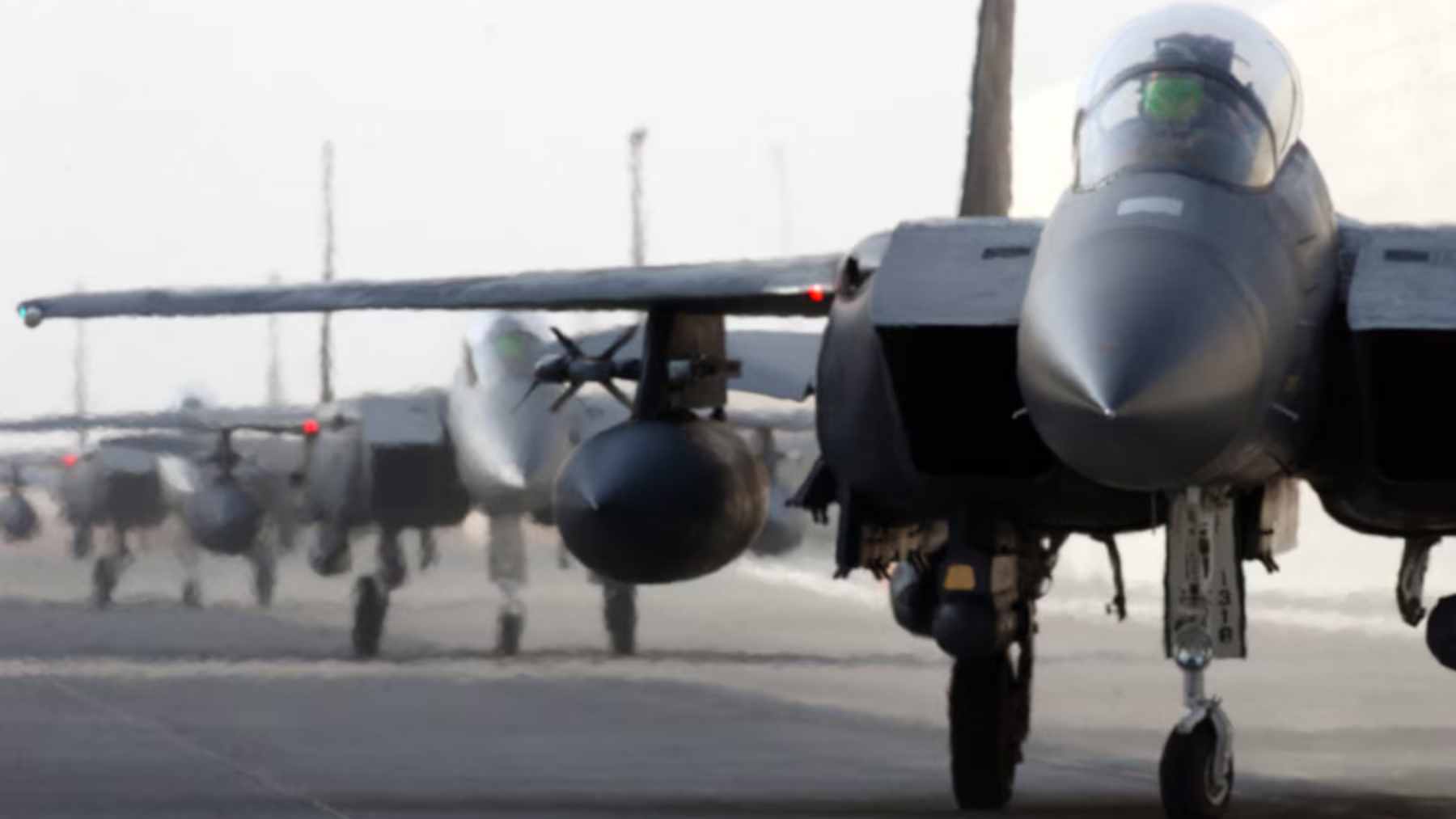
But speed has a price, and not just in procurement. Each F-15E carries up to 35,550 pounds of fuel, and Air Force imagery notes that aerial refueling extends the jet’s mission reach even more. For most people, energy shows up at the gas pump or in the electric bill.
In military aviation, it becomes tanker support, long logistics chains, and a lot of exhaust.
Defense officials said in 2023 that the Pentagon had used three billion gallons of fuel in the previous year, with the Air Force alone accounting for roughly two billion gallons of aviation fuel. That is not a side issue, it is part of the mission itself.
What comes next
That’s why the environment conversation around combat aviation is changing. It is no longer only about emissions. It is also about resilience, supply, and range.
The Department of Energy says the federal SAF Grand Challenge is targeting at least a 50% cut in life cycle emissions compared with conventional fuel, alongside a goal of 3 billion gallons of domestic sustainable aviation fuel by 2030.
A related federal roadmap also says the Department of Defense is leading fuel testing efforts for military aircraft, with a long-term push to enable SAF use up to 100%. No one should pretend an F-15E can go “green” overnight. Still, the direction is clear.
The same aircraft that gives commanders flexibility also shows how tightly military technology and environmental strategy are now linked.
The press release was published on U.S. Central Command.