Have you ever watched your phone battery hit 3% right when you need a map, a weather alert, or a flashlight? That anxiety is exactly what portable clean energy gadgets are trying to erase, especially as outages and outdoor work become more common parts of modern life.
A Canadian startup called Aurea Technologies is now pushing a different idea with Shine 2.0, a portable wind turbine meant to keep small devices charged after dark and in rainy weather. It is a clever slice of climate resilience tech, but it is not a magic replacement for solar panels because everything depends on one simple thing, steady wind.
What Shine 2.0 actually is
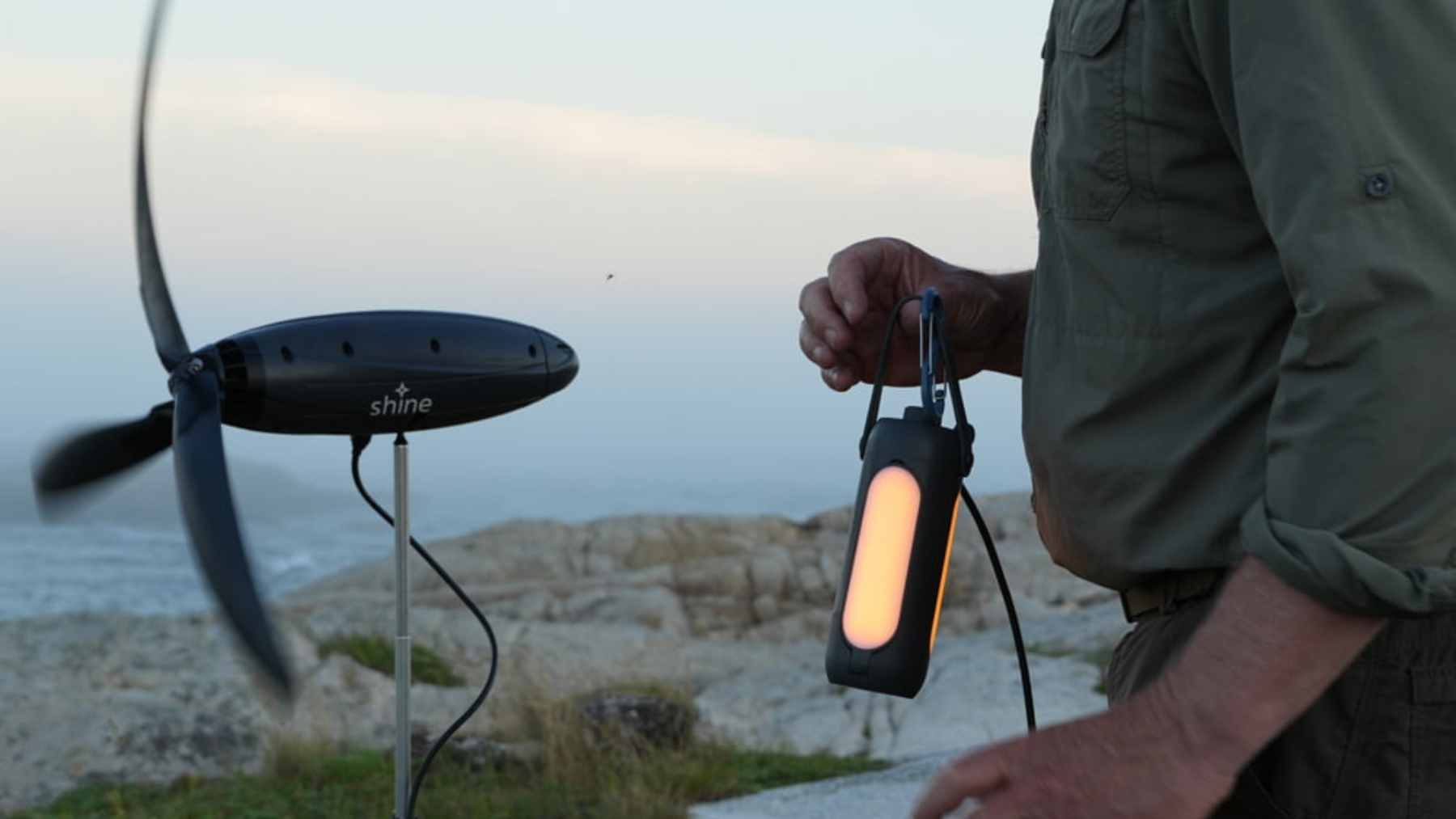
Shine 2.0 is marketed as a compact wind turbine that packs down to around 3 lbs. and can spin in winds from about 8 to 28 mph, with a peak output of up to 50 watts. It also includes an internal 12,000 mAh battery so it can store energy and work like a regular power bank when the air goes still.
The big upgrade is connectivity and charging speed. Reports describe a USB-C port that can deliver up to 75 watts from the internal battery, plus a Bluetooth app that shows wind speed, energy output, and battery status in real time. GearJunkie also describes an MPPT charge controller meant to keep the turbine efficient as winds rise and fall.
Shine’s own pitch leans on portability and “anytime” generation. Shine spokesperson Vanessa Ferguson told GearJunkie that the device has “one of the highest power-to-weight ratios” in its category and can work “day or night, rain or shine” in places where wind is consistent.
The environmental case is less fuel and more resilience
The climate logic is not complicated–if a small wind turbine keeps your phone, headlamp, radio, or laptop topped up, that is one less reason to run a gasoline generator that brings noise, fumes, and extra emissions into the places people go to escape them.
And blackouts are no longer rare, “once in a decade” events for many families. The US Energy Information Administration reported that electricity customers averaged about 11 hours of interruptions in 2024, nearly twice the annual average from the previous decade, with major hurricanes responsible for most of the outage time.
In practical terms, this is where small renewables fit. They do not fix the grid, but they can keep the basics alive when the lights go out, the Wi-Fi dies, and the electric bill keeps showing up anyway.
Crowdfunding makes the business story messy
Shine 2.0 is being sold the way a lot of niche clean tech launches today, through crowdfunding and preorder campaigns. GearJunkie reported an Indiegogo campaign total of more than $772,000 from nearly 1,500 backers, with early pricing around $400 compared with an eventual price listed near $571.
There is some credibility behind the pitch. GearJunkie also said the earlier Shine 1.0 model was purchased by about 2,300 customers across the United States, Canada, and Europe, and Aurea’s own news page highlights a 2025 “HardTech Award” tied to the Shine turbine.
Still, buyers should keep their eyes open. Crowdfunded electronics can slip on certifications, software, and logistics, and even mainstream outlets flagged the usual risk of delays around the campaign’s stated delivery window.
Why defense and emergency teams care about micro power
Portable wind power might look like a camping accessory, but the same resilience logic shows up in military planning and disaster response. A European Union Institute for Security Studies brief notes that fuel supply has been identified as a “critical vulnerability,” and it cites a US military study linking fuel convoys in Iraq and Afghanistan to fatalities.
US defense policy has also been moving toward efficiency, electrification, and distributed energy, even while warning about new supply chain risks.
The Department of Defense’s 2023 Operational Energy Strategy discusses electrification and sustainable fuels, but also flags uncertainty around batteries and new energy supply chains in contested environments.
You can see the infrastructure shift on the ground as well. The US Army Reserve has described Fort Hunter Liggett’s microgrid as a fully renewable system built to improve energy resilience, including staying operational when the wider grid fails.
What 50 watts feels like in real life
Fifty watts is meaningful, but it is not constant, and wind is not a light switch. The official specs will always look better than the night you spend in a protected campsite where the breeze never quite arrives.
The Verge reported that at the minimum 8 mph breeze, charging can drop below 5 watts, and the company estimated it could take more than 11 hours to charge a smartphone in a “slight breeze.”
The internal battery helps smooth that stop and go behavior. At typical lithium ion voltage, 12,000 mAh works out to roughly 40 to 45 watt-hours, which is often enough for a couple of phone charges before you even get meaningful wind.
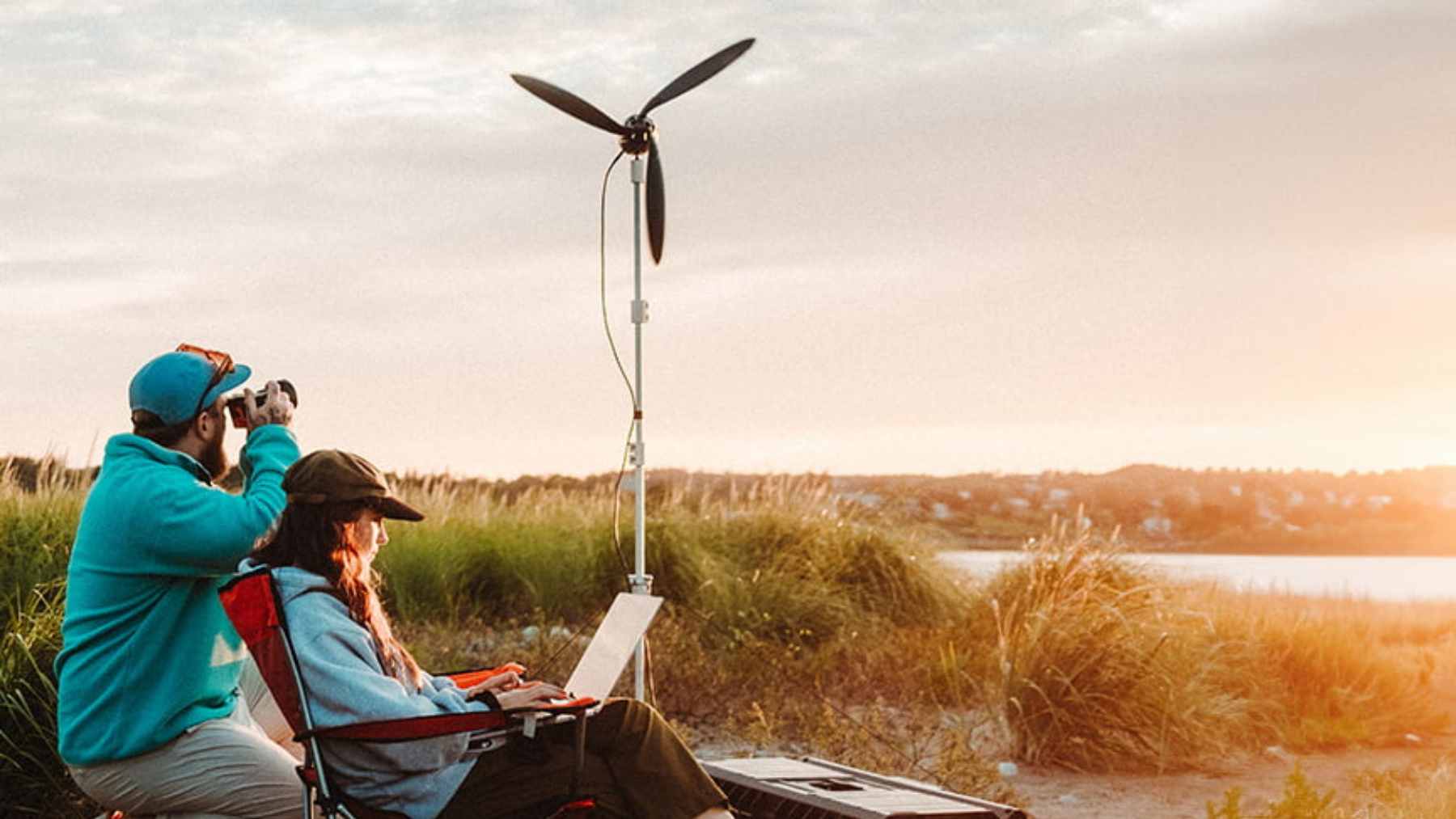
So who is this really for? If you camp on coasts, travel open highways, work in the field, or want a quiet backup that can keep going after sunset, a pocket turbine can be a useful complement to solar, not a replacement.
The official campaign update was published on Kickstarter, and it remains the most recent official reference point for the project’s public specs and status.