Rooftop solar has become a familiar sight, but in dense cities the roof is often the smallest, messiest piece of real estate you own. A new study estimates that putting solar panels on building facades worldwide could generate about 732.5 terawatt-hours of electricity a year and cut average building electricity demand by 8.1%.
That second number matters when intense summer heat drives the air conditioner and your electric bill up at the same time. Building operations account for about 30% of global final energy use and 26% of global energy-related emissions. Rooftops alone may not be enough to bend that curve, so why keep treating walls like dead space?
Why rooftops are hitting their limits
City roofs are crowded with vents, elevators, telecom gear, and HVAC equipment, and many are shaded by neighboring towers. Even where there is space, rules and structural limits can slow down installations, especially on older buildings.
Façades are the opposite. They are vast, vertical, and often left out of energy planning even though they sit in the sun every day.
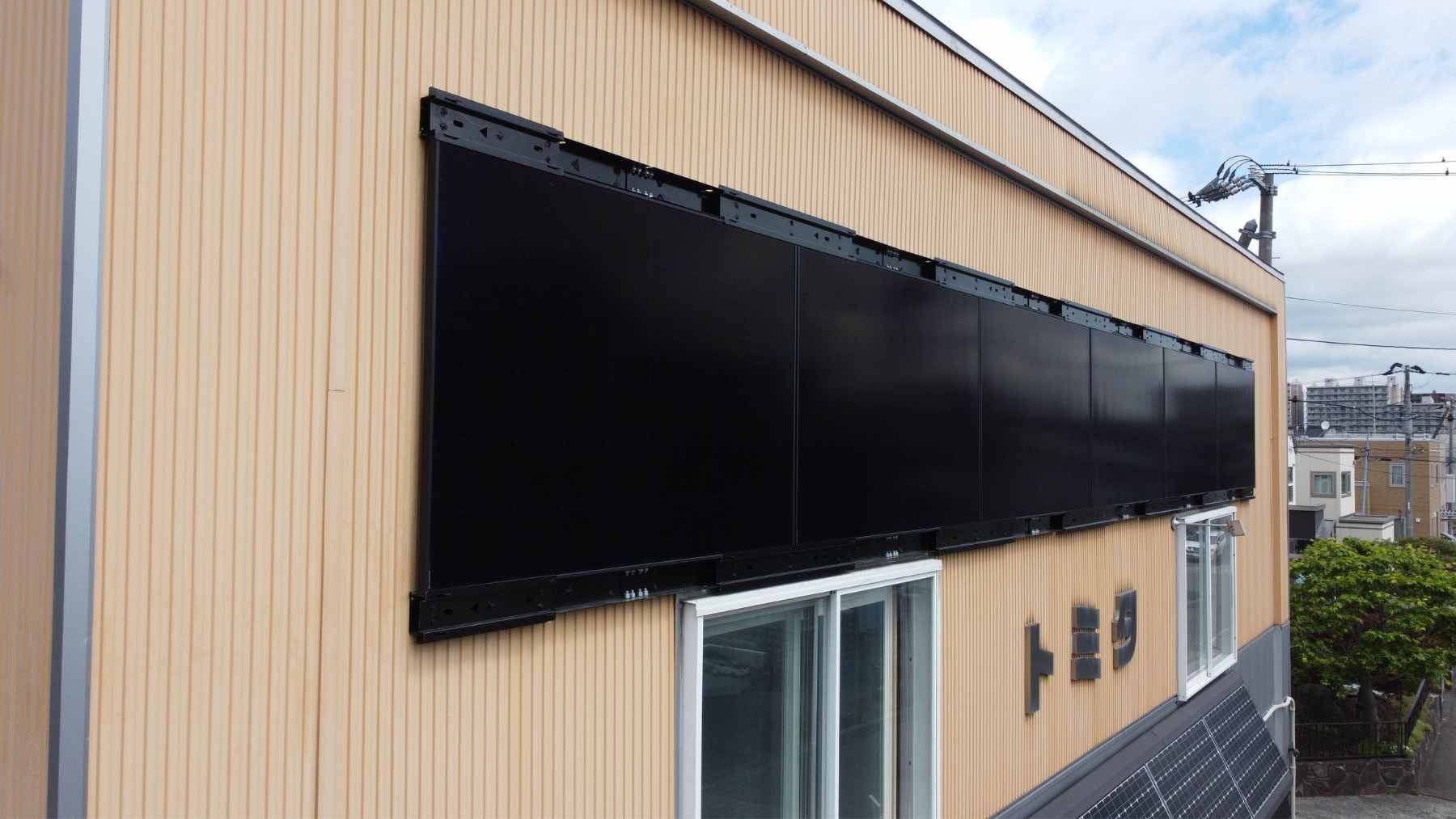
The technology is known as façade-integrated photovoltaics, or FIPV, and the new research models what happens when those modules become part of a building’s outer “skin.” It is still earlier-stage than rooftop solar in most markets, but in practical terms it turns a wall from passive cladding into a power-generating surface.
A two-for-one climate tool
FIPV is not just about harvesting sunlight. When panels shade exterior walls, they can reduce how much heat gets absorbed and leaks indoors, which lowers cooling needs during hot spells.
In the deployable scenario modeled in Nature Climate Change, the combined effect of electricity generation and lower cooling loads reduced building electricity demand by an average of 8.1%. It is the kind of small percentage that can feel big on the grid when everyone in a neighborhood turns on the AC at once.
Professor Yao Ling of the Chinese Academy of Sciences team called it “an overlooked opportunity to make buildings more energy-efficient and climate-resilient at the same time.”
In a gradual S-curve adoption reaching upper-bound potential by 2050, the researchers estimate cumulative emission reductions of up to 37.7 gigatons of CO2, which they translate into about 0.0519 °C of avoided warming under currently announced national policies. It is model-based math, but the direction is hard to ignore.
The business case is not a simple payback chart
Wall-mounted solar typically costs more than conventional rooftop systems, partly because it has to satisfy façade standards for weather, wind, and fire safety. The study still found that over 80% of modeled urban districts showed lifetime electricity expenditure savings once you count both generated power and reduced cooling demand.
That is a signal for real estate owners, insurers, and lenders, not just clean-tech enthusiasts. If a façade retrofit can lower operating costs and reduce heat stress, it starts to look like a resilience upgrade similar to better glazing or insulation.
But temper the hype–a result saying “over 80%” of districts save money is not the same as saying every building will slash its power bill, and the paper’s theoretical generation range runs from 8.9 to 7,671.3 TWh, depending on assumptions.
Why defense and critical infrastructure are watching
Energy is a quiet vulnerability for any mission that depends on computers, refrigeration, and reliable communications, from municipal emergency centers to military logistics hubs. Façade solar does not replace the grid, but it can add distributed generation in places where roofs are already spoken for.
Think about data centers, hospitals, rail stations, or base buildings with high daytime loads and limited land for ground-mounted solar. When heat waves stress the grid, on-site generation paired with storage can help keep essential services running, even if the neighborhood goes dark.
The researchers also leaned into a very modern approach for energy policy work, making modeling code and tools available online for others to test and adapt. That matters for planners, because shading from nearby buildings and the orientation of a single street can make or break performance.
What cities need to get right
Not every wall is a good wall. North-facing facades, deep urban canyons, heavy shading, and poor ventilation behind the panels can all shrink the payoff, and maintenance is harder when your power plant is several stories up.
The paper argues that benefits depend on targeted policies and strategies tailored to local conditions, which is polite language for “there is no one-size-fits-all rollout.” Expect building codes, permitting, and grid interconnection rules to do a lot of the real-world work here. Still, the direction is clear: walls can work harder than we think.
The study was published on Nature Climate Change.