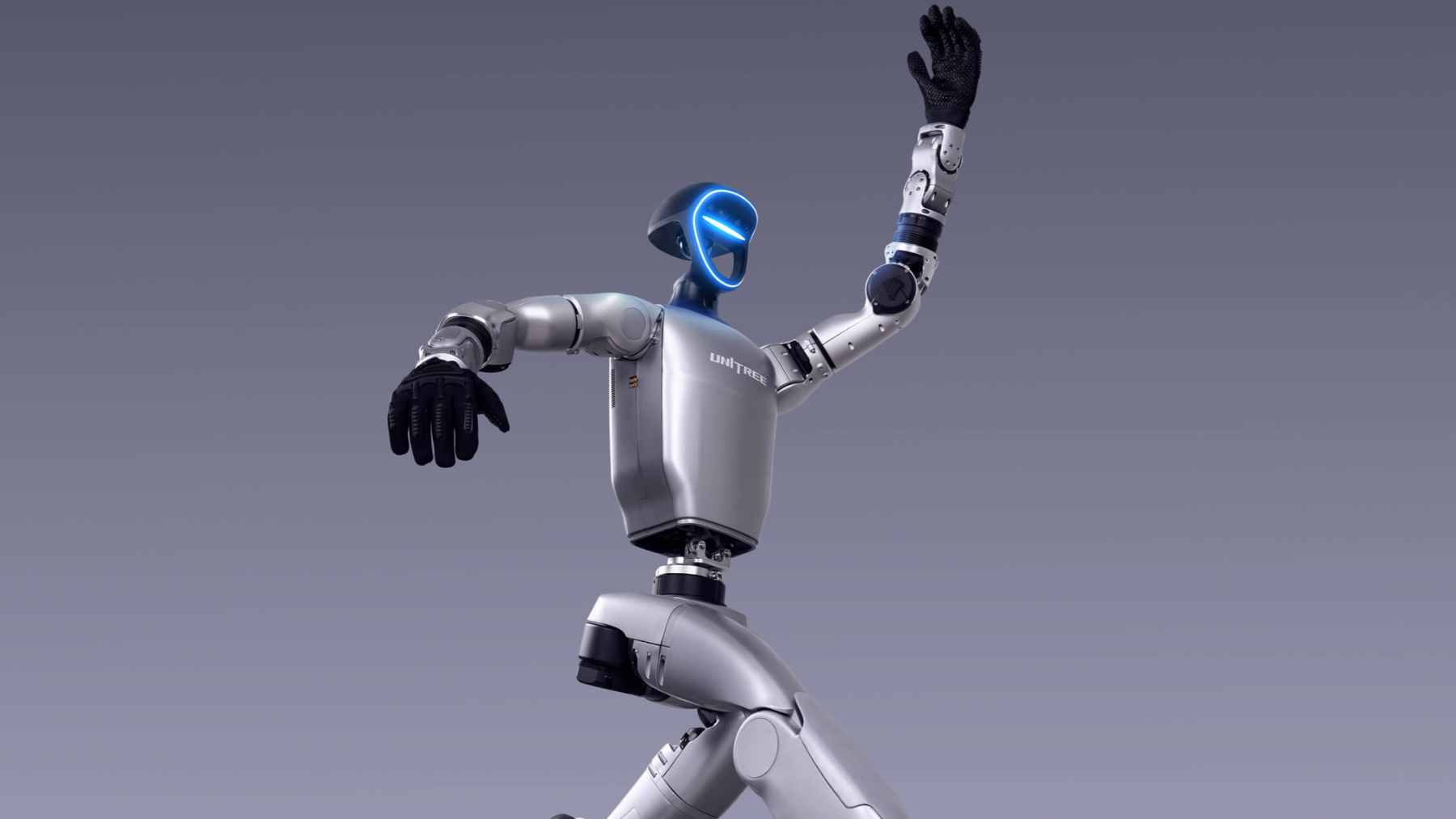
A humanoid robot is now showing up on a mainstream shopping site, right alongside phone cases and kitchen gadgets. China’s Unitree Robotics has started selling its R1 humanoid robot internationally through Alibaba’s AliExpress, with reports putting the all-in price for U.S. buyers at roughly $8,150 and deliveries expected to start around June 30.
That retail shift is the headline, but the environmental story is the one to watch. When humanoid robots move from labs to shopping carts, they also join the same global electronics pipeline that already struggles with recycling, shipping emissions, and resource-intensive supply chains.
In 2022, the world generated about 68 million tons of e-waste, and only 22.3% was documented as formally collected and recycled.
Humanoid robots go retail
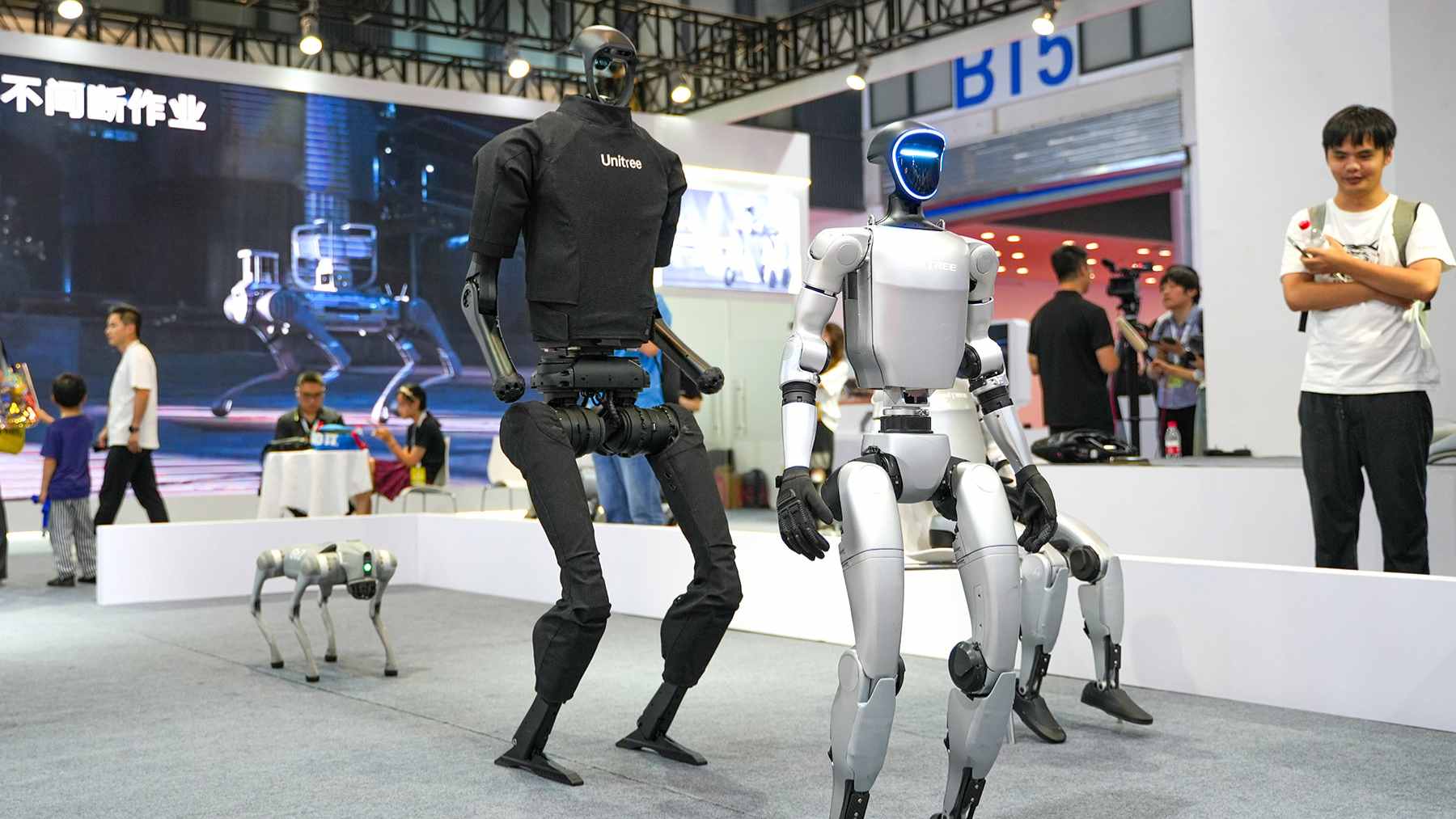
Unitree’s own specifications frame the R1 as a compact humanoid, roughly 123 cm (4 ft.) tall and about 27 to 29 kg (60-64 lbs.) with its battery, depending on the version. The company lists an R1 AIR with 20 degrees of freedom and an R1 with 26, plus a lithium battery and built-in support for voice and image interactions via what it calls a “Large Multimodal Model.”
So what does it actually do? WIRED notes the R1 can do cartwheels and other athletic moves, and Unitree even markets it as “born for sport,” but it also lacks articulated fingers and is not designed to be a true home helper.
Unitree instead describes it as an “intelligent companion” aimed at interaction, research, and software development, with a software developer kit for people who want to build on top of it.
The pricing story depends on where you live and what “price” even means. On Unitree’s site, the R1 is listed at $5,900 and the R1 AIR at $4,900 excluding taxes and shipping, while reporting around the AliExpress rollout suggests totals can rise once import fees and logistics are added, especially for overseas buyers.
China’s production push is accelerating
This AliExpress moment is landing in the middle of a broader manufacturing ramp in China.
China Daily has reported that an automated humanoid robot production line in Foshan, built through a collaboration between Leju Robotics and Dongfang Precision, is designed for an annual capacity of over 10,000 humanoid robots, with a pace described as roughly one unit every 30 minutes.
TrendForce says China’s humanoid robot output is expected to surge 94% in 2026, with Unitree and AgiBot projected to capture nearly 80% of the market share, signaling a shift from flashy demos to scaled production.
That’s the kind of consolidation that can drive prices down fast, for the most part by making supply chains and components more standardized.
The money side matters because it explains the urgency. Reuters reported that Unitree has filed for an IPO on Shanghai’s STAR Market, aiming to raise 4.2 billion yuan ($616 million), and that its humanoid robots grew into a larger share of revenue as the company expanded. Investors are betting this is not a novelty cycle, but the start of a new hardware category.
The e-waste problem gets a new category
Humanoid robots are not just “cool machines.” They are electronics, packed with batteries, motors, sensors, and computing hardware, entering a world where the waste stream is already growing faster than recycling systems can keep up.
The Global E-waste Monitor reports e-waste is on track to rise to 90 million tons by 2030, and the WHO warns that e-waste contains hazardous substances that create environmental and health risks when mismanaged.
Here’s the everyday-life test: if you have ever had a laptop battery fade after a couple of sticky summers, you already understand the risk for a far more complex device with many moving parts.
Unitree highlights “easy maintenance” in its product messaging, but buyers and regulators will still need clarity on repair options, spare parts, software support timelines, and end-of-life takeback so these devices do not become the next hard-to-recycle headache.
Shipping and the carbon math behind “free delivery”
“Free shipping” sounds harmless, but freight has a climate cost. The International Maritime Organization estimates that shipping emitted 1,160 million tons of CO2 in 2018, about 2.89% of total global anthropogenic CO2 emissions, and maritime trade moves more than 80% of all goods.
Then there’s the speed question. Per ton-mile, air cargo produces far more CO2 than most other freight modes, and the U.S. Congressional Budget Office notes just how wide the gap can be compared with ocean shipping.
If companies feel pressure to move high-value products quickly across borders, the carbon intensity can jump, even when the checkout page makes it look like a bargain.
Climate and defense use cases are real, and that is the tricky part
To be fair, robots can support environmental goals in practical ways, especially in hazardous or hard-to-reach places.
Inspection work around energy infrastructure, monitoring in dangerous industrial environments, or testing new recycling automation can all benefit from better mobility and sensing, and Unitree openly pitches the R1 toward research and development rather than household chores.
Still, the gap between an athletic demo and a real-world climate tool is big, and it will take time, software, and safer deployment standards to close it.
Defense planners are watching this category for a different reason, and it still intersects with the environment.
Militaries have long used robots for explosive ordnance disposal and other high-risk tasks, with platforms like QinetiQ’s TALON highlighted for use in major incidents and deployments, and firms like L3Harris continuing to win contracts for EOD robots with the U.S. Navy and Marine Corps.
At the same time, civil agencies are investing in robots for disaster response, which becomes more relevant as extreme events strain emergency services.
The bottom line is not “robots are good” or “robots are bad.” It’s whether this new wave of consumer-accessible humanoids comes with cleaner logistics, repairable hardware, and a credible end-of-life plan, because otherwise the planet pays the hidden bill.
The official report was published on The Global E-waste Monitor 2024.