What if the hardest part of nuclear power was not the electricity, but the leftover fuel that keeps demanding attention long after the lights are on and the bills are paid? In the U.S., spent nuclear fuel is still piling up at reactor sites, and the political path to a permanent disposal solution has remained stuck for years.
Now, a federal program is trying a very different approach. ARPA-E has awarded a total of $8.17 million to the Department of Energy’s Thomas Jefferson National Accelerator Facility to develop accelerator technology that could help “burn down” the most troublesome parts of nuclear waste, potentially shrinking the storage timeline from about 100,000 years to around 300 years, by the agency’s own estimates.
Why the waste clock matters
By DOE’s count, the U.S. has more than 99,000 tons of spent nuclear fuel, stored across more than 70 sites in 35 states, and adds roughly 2,200 more tons each year. That is not just a paperwork problem, it is an infrastructure problem that quietly grows with every refueling outage.
The environmental story is that most of the heat and radioactivity from used fuel drops over the first few centuries, but a smaller slice stays hazardous for far longer. The troublemakers are long-lived transuranic isotopes such as plutonium-239 and americium-241, which drive the “we need a plan for 100,000 years” headlines.
This is also a military and defense shadow story. Radioactive waste is not only a commercial reactor issue, it is also tied to weapons programs, and the same federal agencies that manage energy R&D manage cleanup and storage liabilities.
The Government Accountability Office has repeatedly flagged nuclear waste disposal as a high-risk federal challenge, with billions already paid in damages to utilities because a permanent repository still does not exist.
The 300-year idea
The basic bet is surprisingly simple to describe, even if it is hard to execute. Separate out the longest-lived, most radiotoxic elements from spent fuel, then use an accelerator-driven subcritical reactor to transmute them into shorter-lived isotopes. If it works, the timeline for “dangerous forever” could become “dangerous for a few centuries.”
Some of those isotopes are famous for a reason. The Nuclear Regulatory Commission lists plutonium-239 with a half-life of 24,100 years, while EPA lists americium-241 at about 432 years, and both create long-term stewardship headaches when they end up in waste streams.
ARPA-E’s claim is that today’s unprocessed spent fuel remains hazardous on the order of 100,000 years, but that selective recycling and transmutation of the worst actors could reduce the time for the remaining material to return to natural-uranium-ore levels to roughly 300 years. It is not instant, but it is a different scale of problem for future communities.
How an accelerator helps
Jefferson Lab is working on what are known as accelerator-driven systems (ADS). Put simply, a high-energy proton beam hits a heavy-metal target, releasing neutrons, and those neutrons keep a subcritical reactor running while they also reshape the waste isotopes you want to neutralize.
Those neutrons matter because they can be made on demand. The accelerator “spalls” neutrons out of a target such as liquid mercury, and the resulting neutron flood can be tuned to drive reactions in isotopes that are otherwise stubborn in conventional reactors.
There is a built-in bonus that makes the approach more than a cleanup story. The same reactions that transmute waste generate heat, and heat can generate electricity, so a well-designed system could, in theory, turn part of the waste management bill into a revenue stream.
The tech bottleneck is not nuclear, it is hardware
The promise has been around for decades, but the economics have always been brutal. High-power accelerators are expensive machines, and the energy needed to run them can wipe out any practical advantage if the efficiency is not high and the uptime is not rock-solid.
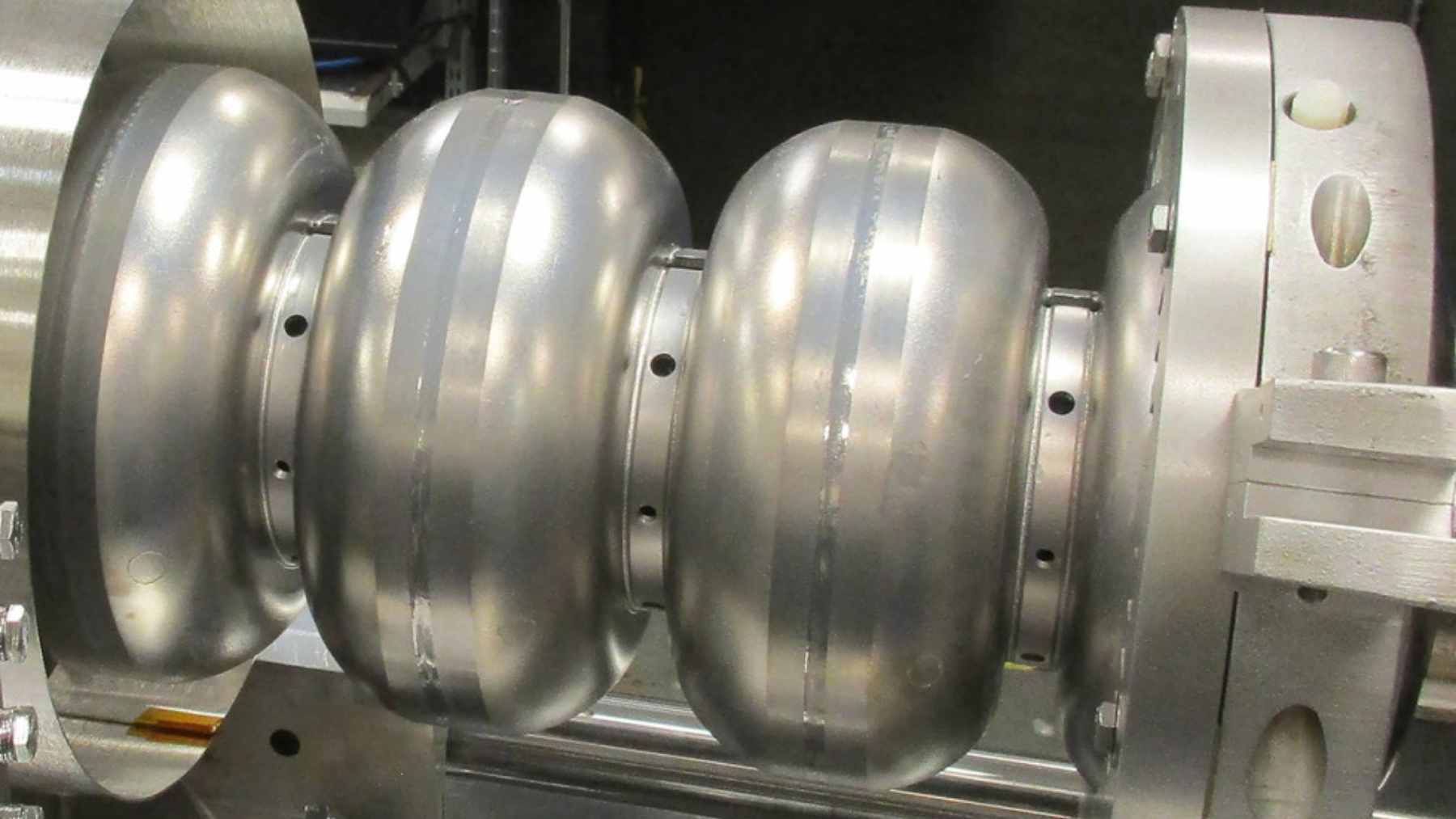
One Jefferson Lab project focuses on superconducting radio-frequency cavities, the components that push particles to high speeds. By using niobium-tin coatings that can operate at warmer temperatures than pure niobium, the lab hopes to reduce reliance on complex cryogenic systems and use more standard commercial cooling.
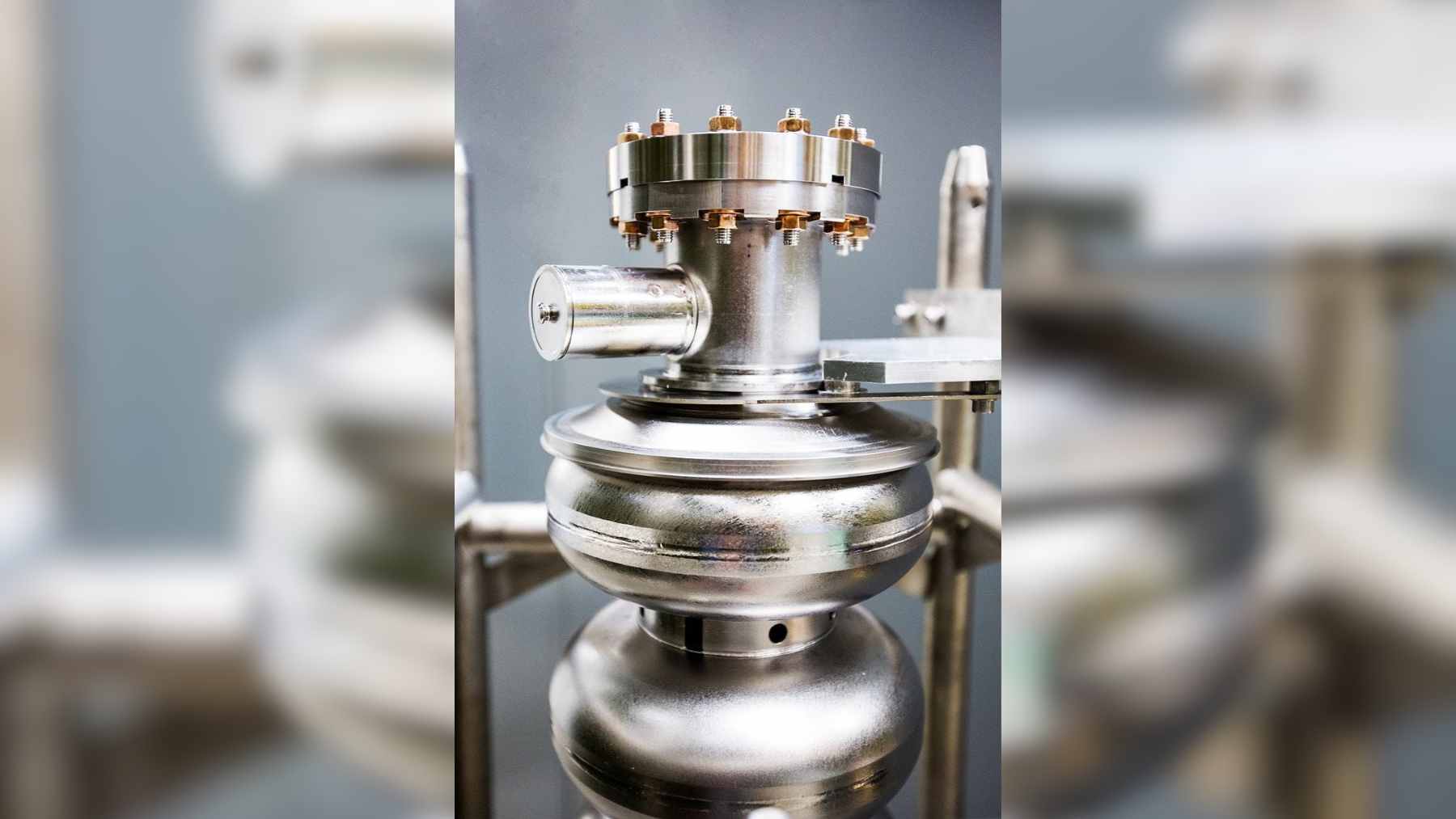
This is where the story starts to feel less like sci-fi and more like supply chain reality. If you cannot build and maintain these accelerators at scale, then transmutation stays stuck as a neat physics idea instead of becoming an environmental tool.
The microwave part is real
The second Jefferson Lab project targets the power system that drives the accelerator beam. It is exploring advanced magnetrons, the same basic technology behind microwave ovens, to deliver the radio-frequency power needed to run an accelerator at 805 megahertz with tight stability.
The details matter, because grid electricity is not free and it is not always clean. Better RF efficiency means less wasted power, lower operating cost, and a smaller carbon footprint, which matters if the point of nuclear energy is to deliver zero-carbon electricity at scale.
ARPA-E’s project sheet lays out the goal in blunt terms: make it possible to transmute the most problematic isotopes in used nuclear fuel by funding novel particle generation systems, then prove it can work at a cost and reliability level the power industry could actually live with.
What to watch next
If this sounds like a silver bullet, it is worth slowing down. These are technology development projects, not operating waste-burners, and turning accelerator-driven systems into licensed, industrial facilities would take years of testing, regulation, and public scrutiny.
Still, none of this work is happening in a vacuum. Jefferson Lab’s accelerator expertise is rooted in decades of building superconducting machines for physics, including the Continuous Electron Beam Accelerator Facility (CEBAF), which came online for its first experiment in 1995 and supports more than 1,700 nuclear physicists worldwide.
And there is one more reality check that matters for ordinary people: Even if transmutation works, it does not erase the need for interim storage, secure transportation, and transparent oversight, because the U.S. will keep producing spent fuel as long as reactors keep running.
GAO’s view is blunt: the waste problem is still “high risk,” and it remains a federal responsibility that will not disappear on its own.
The press release was published on Jefferson Lab.