A California man is accused of pulling off a strange kind of return fraud that sounds almost like a prank until you see the numbers. Irvine police say Jarrelle Augustine allegedly bought high-priced LEGO sets, removed the bricks at home, refilled the boxes with dried pasta, then returned them for refunds, repeating the play an estimated 70 times for roughly $34,000 in losses.
Investigators say the pasta was chosen because it can mimic the weight and rattle of LEGO pieces inside a sealed box.
It is easy to treat this as a quirky “true crime” headline, but it points to something bigger and less visible. Retail theft, cargo theft, and return fraud all feed a system that already produces a lot of extra shipping, packaging, and wasted product.
When the reverse logistics machine is abused, the climate and waste impacts are not a side effect, they are part of the bill.
A refund trick that turns into real waste
According to Irvine police, the alleged scam relied on one basic detail most shoppers recognize instantly. If you shake a LEGO box, you expect to hear a familiar plastic clatter, and dried pasta can imitate that sound well enough to pass a quick check at a busy returns counter.
As Irvine Police Department spokesperson Ziggy Azarcon put it, one opened box contained “bags of dry pasta” instead of LEGO.
The bigger problem is what happens next inside the retailer’s system. A tampered set is typically unsellable as new, and in a case like this the stolen bricks can move into a thriving resale market while the retailer is left holding a box of trash and a loss on the books.
Police and media reports say the targets included high-value themes like Star Wars, which tend to command strong prices online.
Then comes the ripple effect that regular shoppers notice: more fraud pushes stores toward tighter return rules, more inspections, and more security measures that slow down basic errands. If you have ever waited for an employee to unlock a case or approve a return, you have seen how “shrink” changes the shopping experience.
Why LEGO is perfect for criminals and investors
LEGO is not just a toy anymore, at least not in financial terms. A peer-reviewed study in Research in International Business and Finance analyzed thousands of sets and found retired sets generated an average annual return of about 11%, with big variation depending on the set.
That kind of performance helps explain why high-demand sets can attract both collectors and thieves.
The primary market is also booming, which raises the stakes for retailers. The LEGO Group reported record 2024 revenue of DKK 74.3 billion ($11.7 billion) and operating profit of DKK 18.7 billion ($2.9 billion), driven by strong demand across regions and a broad product portfolio.
When a single premium set can cost hundreds of dollars, the incentive to steal, fence, or fraudulently return it becomes obvious.
There is also an environmental layer to this story that rarely gets discussed. LEGO bricks are plastic, but they are also unusually durable and often reused for years, which is one reason the secondary market is so active.
The company says it is increasing renewable and recycled inputs, reporting that 52% of materials used in 2025 came from recycled and renewable sources (by its accounting approach), while maintaining long-term emissions reduction targets.
Cargo theft is now a supply chain security story
This is not happening only at customer service desks. In April 2026, the Kern County Sheriff’s Office said deputies recovered LEGO products valued at about $1 million and linked the haul to stolen freight trailers that were taken while moving from Fort Worth, Texas, to Moreno Valley, California.
That is not petty shoplifting, it is organized cargo theft with logistics planning behind it.
The broader data shows why cargo crime is getting so much attention from businesses and law enforcement. Verisk CargoNet estimated cargo theft losses of nearly $725 million in 2025, a 60% jump from 2024, and said the average value per theft rose to $273,990 as criminals focused more on high-value shipments.
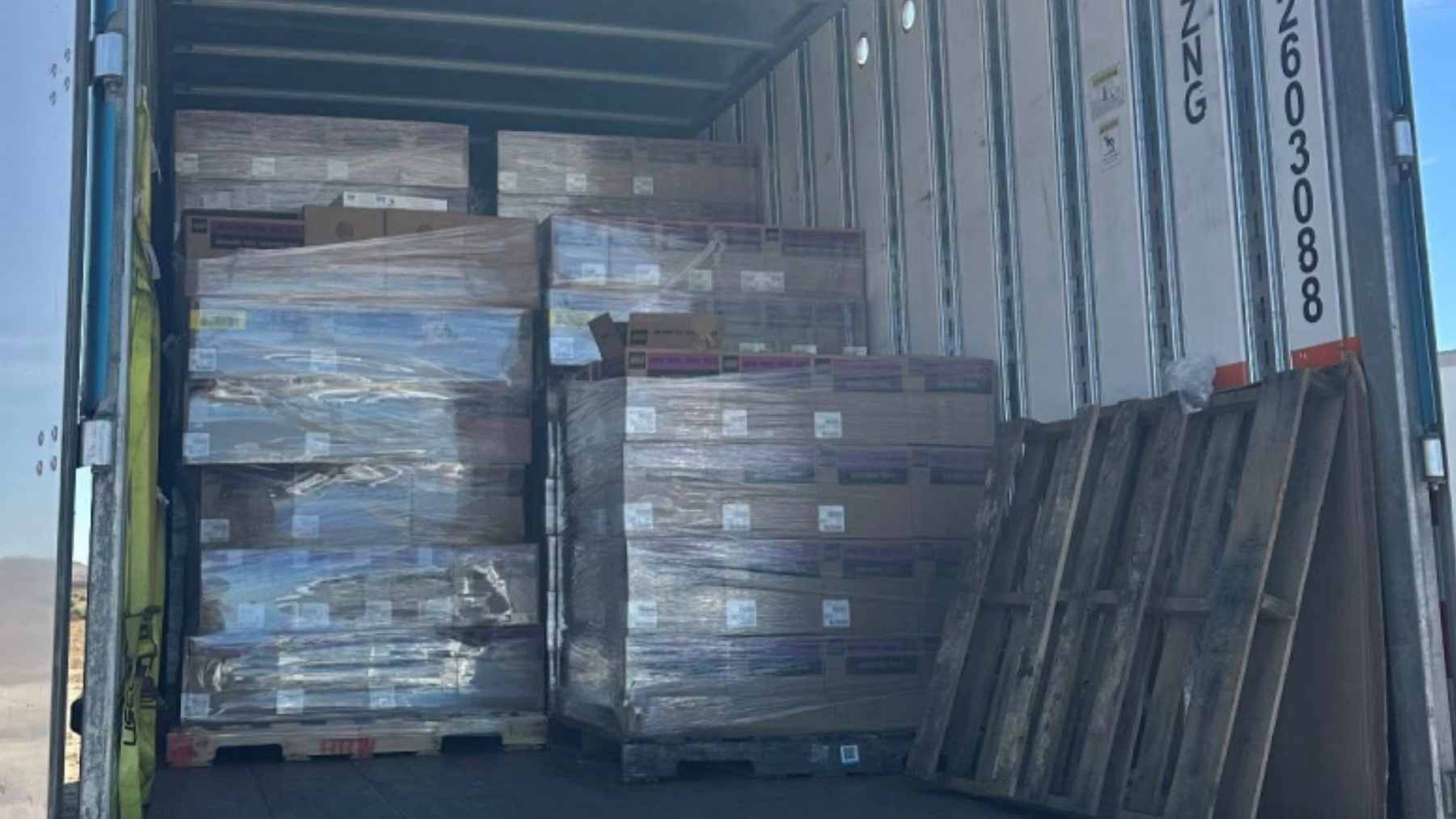
That shift matches what you see in these LEGO cases, where high-demand products are treated like mobile currency.
This is where the “defense” angle comes in, even for something as ordinary as toys. The FBI describes organized retail theft as large-scale theft intended for resale, and it separately tracks cargo theft as a transnational organized crime issue.
Industry groups are also pushing for stronger federal coordination and penalties, arguing these networks pose risks beyond retail balance sheets.
Returns have a climate footprint hiding in plain sight
Returns are massive even when everyone is acting honestly. The National Retail Federation projects total returns could reach $849.9 billion in 2025, and it estimates 19.3% of online sales will be returned in 2025. The same report found 9% of all returns are fraudulent, which means the scam economy is not a rounding error.
Now connect that to emissions and waste, and the story gets less funny fast.
A UNCTAD chapter on e-commerce and environmental sustainability notes that high return rates can lead to goods being thrown away and adds to transport and packaging impacts, citing estimates that U.S. e-commerce returns produced about 14% more landfill waste than brick-and-mortar returns and about 24 million tons of CO2 emissions in 2020.
Optoro separately estimates U.S. returns generate about 5 billion lbs. of landfill waste and 16.5 million tons of carbon emissions annually, largely from moving goods around.
In everyday life, this shows up as more delivery miles, more cardboard, and more “one more trip” trucks making the same routes through neighborhoods.
Even if a returned item gets resold, it still has to be shipped, handled, inspected, and repackaged, and fraud adds extra churn that never needed to happen. That is why return policy changes and smarter verification are increasingly being framed as sustainability actions, not just loss prevention.
Tech defenses should not create new waste
Retailers have tools to fight this, but the best fixes are the ones that do not quietly add more plastic to the problem.
Stronger tamper evidence, better item-level tracking, and more consistent checks for high-risk products can make “box swap” schemes harder to scale, especially when paired with smarter fraud analytics. For the most part, fraud succeeds when systems assume good faith and move too fast to verify.
There is a sustainability tradeoff to watch, though. If the response is layers of extra packaging, more single-use seals, and more rushed shipping to compensate for losses, the waste pile grows even if crime drops.
A greener approach looks more like durable tracking and verification, fewer unnecessary shipments, and clearer return rules that still allow legitimate customers to fix mistakes without treating every box like a potential crime scene.
Consumers are part of this ecosystem too, especially in the secondary market. If a deal on a “new” premium set looks wildly underpriced, it is worth asking for proof of purchase or walking away, because stolen goods thrive on frictionless resale.
The press release was published on Verisk.